#E-commerce Web Development
How to Start an Online Business with eCommerce App Development
Thinking about launching an online eCommerce business? You’re on the right track. With over 2.77 billion digital buyers worldwide—nearly 38% of the global population—online shopping has become a dominant force in retail. The eCommerce industry is projected to reach $8 trillion by 2027, making it one of the most lucrative ventures today.


Currently, 21% of all retail purchases happen online, and this number continues to rise as technology and convenience drive consumer behavior. In fact, there are more than 30 million eCommerce websites globally, reflecting both the immense opportunity and growing competition in the digital marketplace.
Trust plays a critical role in online shopping. 93% of consumers rely on reviews before making a purchase, so reputation management and customer feedback are essential for success. Financially, the sector is booming—global retail eCommerce sales are expected to hit $6.42 trillion in 2025, and the growth trajectory shows no signs of slowing down.
As technology evolves, mobile shopping is becoming increasingly popular. Businesses must prioritize smooth, user-friendly experiences through mobile apps. Whether you’re building a new app or enhancing an existing one, focus on value, usability, and a customer-first approach. Done right, your eCommerce app can drive growth, strengthen customer relationships, and boost brand visibility.
In this guide, we’ll explore essential strategies and considerations for starting an online eCommerce business. Let’s dive in!
What is an eCommerce Business?
An eCommerce business is any company that sells products or services online. These businesses connect with customers through websites, mobile apps, social media platforms, and online marketplaces. They can range from solo entrepreneurs to large global corporations and may operate through a single website or multiple sales channels. Common examples include software providers, clothing retailers, and subscription-based services.
Let’s understand eCommerce business with an example –
Imagine you enjoy making handmade candles and decide to sell them online instead of opening a physical store. Unlike traditional businesses, eCommerce doesn’t require a physical location. You can run your business through a website or mobile app.
Customers can visit your online store, browse different candle options, add their favorites to the cart, and make payments directly on your site. Once an order is placed, you ship the candles to their doorstep. This approach allows you to reach customers across the country—or even globally—without the need for a physical storefront.
Step-by-Step Guide to Starting an eCommerce Business
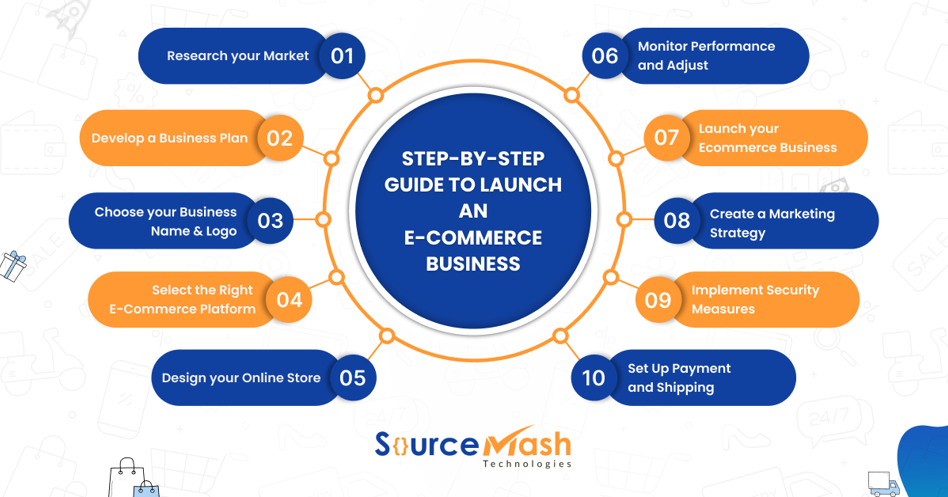
Ready to launch your online store? Here’s a clear roadmap to help you start an eCommerce business the right way. Follow these steps and set yourself up for success:
Step 1: Research Your MarketTake a journalistic approach when researching your market. This method helps you dig deeper, uncover valuable data, and gain insights to build a strong eCommerce strategy.
Use the table below to understand how to research your eCommerce market thoroughly:
|
Research Points |
Details |
|
Define Your Objectives |
Clarify what you aim to achieve with your research (e.g., understanding customer preferences, identifying competitors, exploring market trends). |
|
Identify Your Target Audience |
Develop buyer personas by collecting demographic details (age, gender, income) and psychographic data (interests, values). |
|
Analyze Market Trends |
Utilize tools like Google Trends and industry reports to stay informed about emerging trends and consumer behaviors in your niche. |
|
Conduct Competitor Analysis |
Pinpoint your key competitors and review their websites, product offerings, pricing strategies, and customer feedback. |
|
Gather Customer Insights |
Conduct surveys, interviews, and focus groups to obtain direct feedback from potential customers about their needs and preferences. |
|
Explore Online Forums and Social Media |
Participate in relevant forums and social media groups to observe discussions about similar products. Note customer pain points and desires. |
|
Study Industry Reports and Statistics |
Use resources like Statista or Nielsen for detailed data and analysis of your industry. |
|
Evaluate Pricing Strategies |
Examine competitor pricing and assess customer reactions to various price points. This helps you identify competitive yet profitable pricing. |
|
Understand the Regulatory Landscape |
Learn about legal regulations and compliance requirements for eCommerce in your region (e.g., data privacy laws, consumer protection). |
|
Monitor Technological Changes |
Keep track of technological innovations that could affect your eCommerce operations, such as payment systems, logistics, and marketing tools. |
|
Analyze Sales Channels |
Review different sales channels (e.g., your website, marketplaces like Amazon or Etsy) to determine where your audience prefers to shop. |
|
Compile and Analyze Your Findings |
Organize collected data, identify patterns and insights, and use them to refine your business strategy. |
Step 2: Develop a Business Plan
- Clarifies your vision and objectives
- Defines your target market
- Supports decision-making
- Attracts investors and funding
- Identifies potential challenges
- Establishes business structure and organization
- Builds credibility
Use the table below to guide the development of your eCommerce business plan:
|
Section |
Description |
|
Executive Summary |
Provide a concise overview of your business, including mission statement, key objectives, and the products or services you offer. |
|
Business Description |
Explain the nature of your eCommerce business, the market you aim to fulfill, and what makes your business unique compared to competitors. |
|
Market Analysis |
Research your target audience, industry trends, and competitor landscape to understand market dynamics thoroughly. |
|
Organization and Management |
Describe your business structure (e.g., sole proprietorship, LLC), management team, and roles of each member, if applicable. |
|
Marketing Strategy |
Outline your marketing approach, including branding, pricing, promotion, and distribution channels. Explain how you will attract and retain customers. |
|
Product Line or Services |
Detail the products or services you will offer, including their benefits and how they meet customer needs. |
|
Sales Strategy |
Describe how you will sell your products (e.g., via your website, marketplaces, social media) and the tactics you will use. |
|
Funding Request |
If you need funding, specify the amount required, how you will use it, and any future funding needs. |
|
Financial Projections |
Include projected income statements, cash flow statements, and balance sheets for the next three to five years, along with assumptions supporting your projections. |
Step 3: Choose Your Business Name & Logo
Selecting your business name and logo is a critical step that defines your brand identity and shapes customer perception.
After finalizing your name and logo, registering your business is essential to ensure legal protection and compliance. These steps help build credibility and lay the foundation for eCommerce success.
Choosing Your eCommerce Business Name
Your business name should clearly represent what your business is about. It must reflect your brand identity, be catchy, and resonate with your target audience.
For example, Shopify combines “shop” and “simplify,” suggesting an easy and straightforward platform for setting up online stores.
Here are key considerations when choosing your eCommerce business name:
|
Tips |
Description |
|
Reflect Your Brand Identity |
Your business name should convey what your eCommerce store represents. It should be memorable and resonate with your target audience. Use words that evoke emotions or ideas you want associated with your brand. |
|
Simple and Clear |
Choose a name that is easy to pronounce and remember. Avoid complicated spellings or overly long names to make it easier for customers to recall and recommend. |
|
Check Availability |
Verify that your chosen name is not already in use by searching business registration websites and checking domain availability. |
|
Consider Future Growth |
Select a name that allows for expansion. Avoid names that are too specific to one product if you plan to diversify your offerings later. |
Once your name and logo are finalized, registering your business is crucial for legal protection and compliance. These steps will help you set your eCommerce business on the right path.
Step 4: Select the Right eCommerce Platform
Choosing an eCommerce platform is essential because it will serve as the backbone of your online store. The right platform should be easy to use, scalable, and secure. Popular options include Shopify, WooCommerce, and BigCommerce.
|
Considerations |
Details |
|
Ease of Look |
Look for platforms with intuitive interfaces and customization options that don’t require extensive coding. |
|
Features |
Ensure the platform supports essential features like device compatibility, multi-channel integration, and analytics. |
|
Scalability |
As your business grows, the platform should allow easy addition of new features and products. |
|
Security |
Choose platforms with built-in security features, such as SSL certificates and data encryption, to protect customer information. |
|
Customer Support |
Reliable support ensures technical issues are resolved quickly, minimizing disruption to your business. |
Step 5: Design Your Online Store
A well-designed online store attracts and retains customers. Focus on simplicity, functionality, and a clear layout that guides users through the purchase journey seamlessly.
|
Key Elements |
Details |
|
Intuitive Navigation |
Categories and search options should be clearly labeled, making it easy for users to find what they’re looking for. |
|
Responsive Design |
Ensure your site is mobile-friendly, as mobile commerce is rapidly growing. |
|
High-Quality Images |
Use professional photos and videos to showcase products from multiple angles, highlighting details. |
|
Clear Call-to-Actions (CTAs) |
Use prominent CTAs like “Buy Now” or “Add to Cart” to guide users toward making a purchase. |
|
Product Descriptions |
Craft engaging, SEO-friendly descriptions that answer common questions and help customers make informed decisions. |
Step 6: Set Up Payment and Shipping
Reliable payment and shipping options are essential for customer satisfaction. Provide multiple secure payment gateways and clear shipping policies.
Payment Setup
|
Payment Setup |
Details |
|
Diverse Payment Options |
Accept credit cards, debit cards, PayPal, and other local payment methods based on your target audience. |
|
Security |
Select payment providers with strong security protocols such as PCI compliance to safeguard sensitive data. |
Shipping Setup
|
Shipping Setup |
Details |
|
Shipping Rates |
Offer free shipping, flat rates, or real-time shipping costs based on the customer’s location. |
|
Order Tracking |
Allow customers to track their orders to enhance transparency and trust. |
|
International Shipping |
For international shipping, clearly state policies, fees, and estimated delivery times. |
Step 7: Implement Security Measures
Security is critical to protect customer data and maintain trust. Online threats like phishing and fraud demand robust security protocols.
Key Security Measures
|
Key Security Measures |
Details |
|
SSL Certificates |
SSL certificates encrypt sensitive data, such as credit card details, to protect against hackers. |
|
Data Encryption |
Secures information by converting it into code during transactions. |
|
Regular Software Updates |
Keep your platform and plugins updated to prevent vulnerabilities. |
|
Fraud Detection Tools |
Use monitoring tools to detect suspicious activity, especially during high-traffic periods. |
Step 8: Create a Marketing Strategy
Promoting your eCommerce business is crucial for attracting and retaining customers. A targeted marketing strategy will help you reach your audience and grow revenue effectively.
Marketing Strategies
|
Marketing Strategies |
Details |
|
Influencer Marketing |
Collaborate with influencers who have a strong, established audience within their niche. |
|
Content Marketing |
Develop blog posts, guides, and videos that deliver value to your audience and drive traffic to your site. |
|
Social Media Marketing |
Interact with customers on platforms such as Facebook, Instagram, and Pinterest. |
|
Email Marketing |
Create an email list to share new products, promotions, and updates with previous customers. |
|
Paid Ads |
Utilize PPC ads, social media advertising, and retargeting to attract targeted traffic to your store. |
Step 9: Launch Your eCommerce Business
Once everything is ready, it’s time to launch your eCommerce business. Implement marketing tactics that will generate initial traffic and audience engagement.
Launch Tips
|
Launch Tips |
Details |
|
Pre-Launch Marketing |
Use social media countdowns, share sneak peeks, or run giveaways to build anticipation. |
|
Soft Launch |
Conduct a soft launch to test site functionality with a smaller audience and resolve any issues. |
|
Grand Launch |
After ensuring smooth operations, officially announce the launch via social media, email lists, and other channels. |
Step 10: Monitor Performance and Adjust
Launching your eCommerce business is just a beginning and requires continuous work further. Regularly monitor your store’s performance to make informed improvements.
Key Areas to Monitor
|
Key Areas to Monitor |
Details |
|
Traffic & Sales |
Track visitor numbers, conversion rates, and sales figures using tools like Google Analytics. |
|
Customer Feedback |
Collect reviews and feedback to understand pain points and areas for improvement. |
|
Inventory & Fulfillment |
Ensure stock levels are adequate, and fulfill orders promptly to maintain customer satisfaction. |
|
Marketing ROI |
Analyze the effectiveness of your marketing channels and adjust as necessary. |
How SourceMash Technologies Will Assist You in Building a Robust E-Commerce Business ?
SourceMash Technologies is a leading name in eCommerce app development, committed to helping businesses thrive in the fast-paced digital marketplace. By partnering with us, you gain access to a team of skilled eCommerce developers and designers who understand the intricacies of eCommerce and work to transform your vision into a powerful online presence.
Here’s how we make it happen:
- Customized Solutions to Fit Your Needs
- End-to-End Development Services
- Future-Ready Platforms with Advanced Features
- Proven Strategies for Customer Engagement
- Data-Driven Marketing and Support
SourceMash Technologies is more than just a development company—it’s a dedicated partner supporting you at every stage of your eCommerce journey.
With innovative solutions, customer-first strategies, and a proven track record of successful projects, We are committed to helping you build and sustain a thriving eCommerce business. Reach out today to start your digital success journey!
 MOHALI - HQ
 BANGKOK
 TORONTO
 NEW YORK
 BENGALURU